My Safe Period
The 4-Part Curriculum: a methodological approach to breaking menstrual stigma in schools.
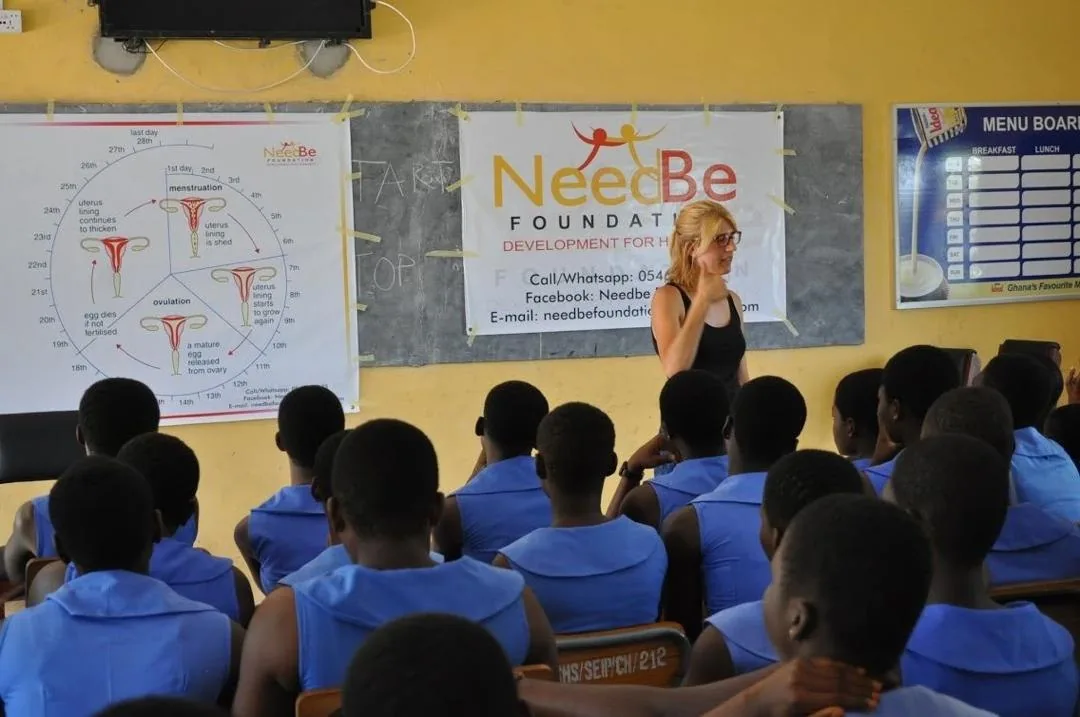
The 4-Part Curriculum: visual learning, open dialogue, cycle tracking, and theory to debunk myths and manage pain.
"Girls Reached: 1,500+ | Schools Partnered: 17+ | Method: 4-Part Curriculum"
My Safe Period is our flagship initiative that breaks the silence surrounding menstruation across Ghana. Through our established methodology, we actively work to dismantle the stigma and equip girls with the knowledge they urgently need. Since launching this program in 2018, we have reached over 5,000 girls across four regions of Ghana, transforming how young women understand and experience their bodies. The program represents our commitment to creating lasting change through education, empowerment, and community engagement.
In many Ghanaian communities, menstruation remains shrouded in secrecy and shame. Girls miss school, avoid social activities, and suffer in silence due to lack of knowledge and resources. The cultural taboos surrounding menstruation create an environment where girls feel isolated, confused, and ashamed of a natural biological process. Many are told that menstruation is "dirty" or something to be hidden, leading to psychological distress and diminished self-esteem during a critical period of adolescent development.
Our 2021 research revealed alarming statistics that underscore the urgency of this work: 65% of girls in rural areas had never received any formal menstrual health education. Nearly half of girls surveyed reported missing school during their periods due to lack of sanitary products or fear of embarrassment. Many shared stories of being mocked by male classmates, of hiding bloodstained uniforms in shame, and of lacking anyone to talk to about their experiences. My Safe Period exists to change this reality by providing comprehensive education in a supportive, non-judgmental environment.
The consequences of this knowledge gap extend far beyond the classroom. Girls who lack menstrual education are more vulnerable to teenage pregnancy, sexually transmitted infections, and long-term reproductive health issues. They are more likely to drop out of school and less likely to pursue higher education or professional careers. By addressing this fundamental gap in health education, we are not just teaching about periods—we are protecting futures and empowering the next generation of Ghanaian women.
The 4-Part Workshop Curriculum
Our specialized approach is evidence-based and ensures long-lasting impact. Developed in collaboration with educational psychologists, medical professionals, and community leaders, the curriculum addresses both the practical and emotional aspects of menstrual health. Each workshop series consists of four interactive sessions, typically conducted over two weeks, allowing time for questions to emerge and trust to develop between facilitators and participants.
1. Visual Learning: Understanding Your Body
Video info-graphics on anatomy, the uterus, and hormones to explain the biological 'why'. We use locally-produced animations that resonate with Ghanaian students, making complex biological concepts accessible and engaging. The session begins with a simple question: "What do you know about menstruation?" This opening invariably reveals knowledge gaps and misconceptions that we address throughout the workshop.
Our visual materials show the internal reproductive system in clear, culturally appropriate illustrations. We explain the hormonal cycle, demonstrating how estrogen and progesterone fluctuate throughout the month and how these changes affect mood, energy levels, and physical sensations. Girls learn that menstruation is not just about bleeding—it is part of a complex, intelligent system that prepares the body for potential pregnancy each month. Understanding this "why" helps demystify the process and fosters appreciation for the body's natural wisdom.
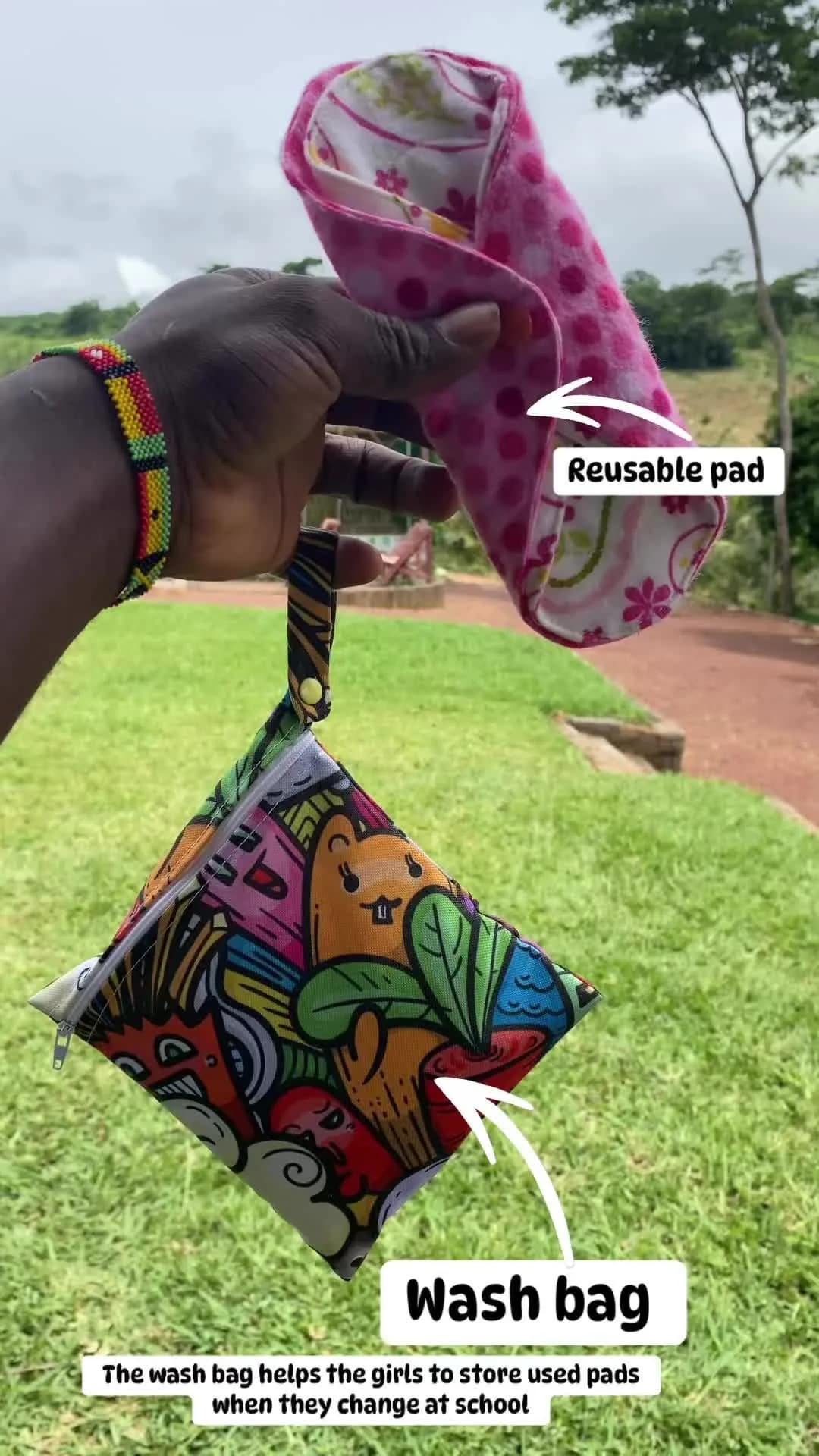
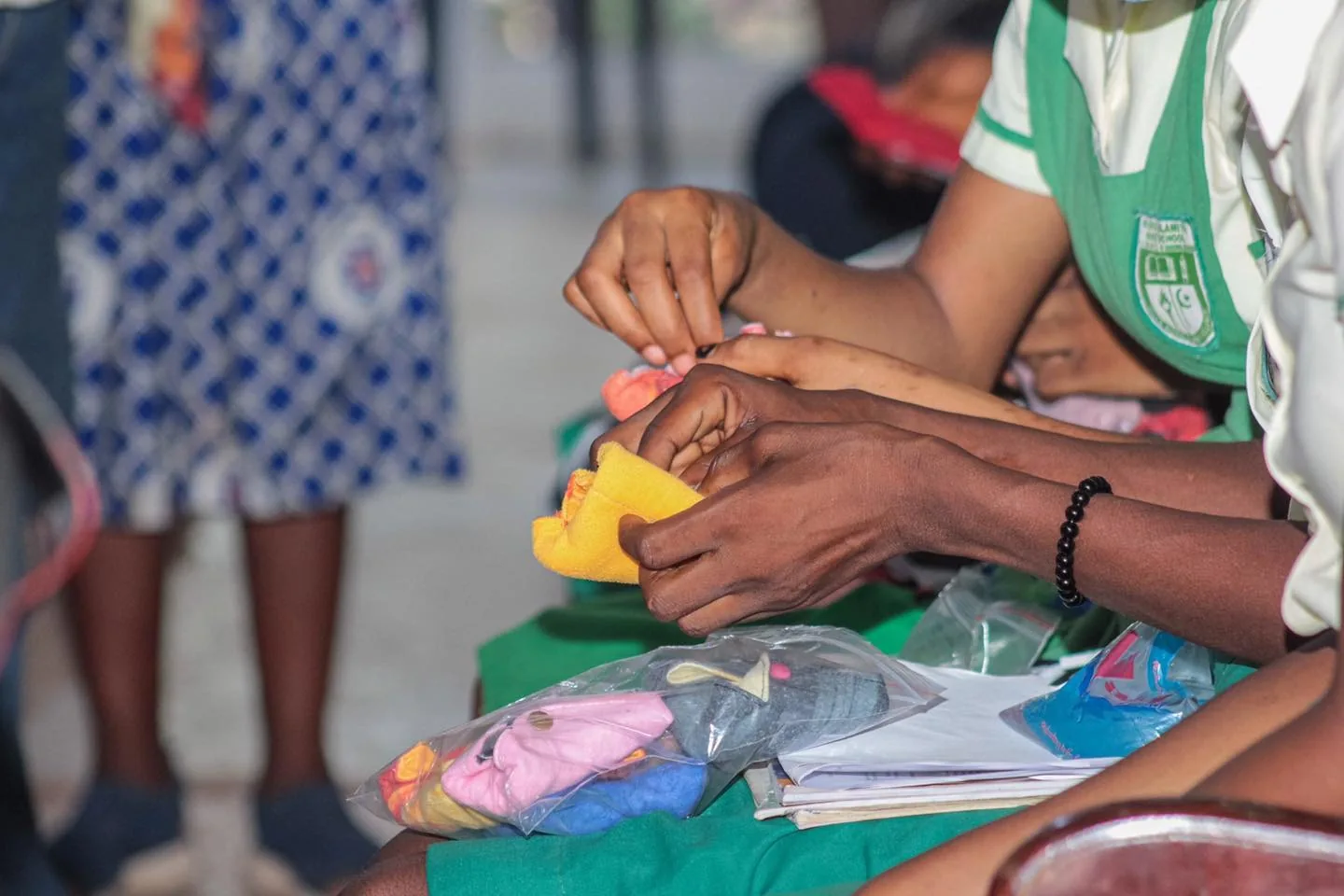
The visual learning module also includes practical demonstrations of proper hygiene practices. We show, using models and props, how to use various menstrual products including disposable pads, reusable cloth pads, and menstrual cups where appropriate. Each girl receives a starter kit containing sanitary products and a booklet with illustrated instructions she can reference later.
2. Open Dialogue: Debunking Myths
A safe space Q&A to effectively debunk prevalent myths. This is often the most transformative session of the workshop, as girls realize they are not alone in their questions and fears. We create a judgment-free environment where any question is welcome, no matter how "embarrassing" it might seem. Our trained facilitators, who are often young women from similar backgrounds, share their own experiences to normalize the conversation.
Common myths we address include:
- Fears of "contamination" during menstruation: We explain that menstruation is a natural, healthy process—not a state of impurity. Girls learn that they can participate in normal activities, including cooking, studying, and socializing, without fear of "contaminating" others.
- Belief that women cannot cook or bathe with others during their periods: We address these cultural restrictions directly, acknowledging their historical roots while explaining the biological reality. Girls learn that proper hygiene practices make these fears unnecessary.
- Misconceptions about exercise and physical activity: Many girls believe they cannot play sports or engage in physical education during menstruation. We teach that exercise is not only safe but beneficial, helping to reduce cramps and improve mood through endorphin release.
- Taboos around discussing menstruation with male family members: We acknowledge the cultural sensitivity while encouraging girls to seek support from trusted adults, whether male or female. We provide scripts and strategies for talking to parents about menstrual health needs.
The open dialogue session often reveals the depth of misinformation girls have absorbed. In one memorable workshop in Savelugu, a 14-year-old girl asked if she could become pregnant from swimming in a river during her period. The question led to a broader discussion about conception, consent, and bodily autonomy that proved invaluable for the entire group. These moments of clarity can be life-changing.
3. Cycle Tracking: Knowing Your Body's Rhythm
Practical training utilizing a menstrual calculation chart and fact sheet so every girl knows her body's rhythm. Each participant receives a durable tracking calendar and learns to identify patterns in their cycle. This skill empowers girls to anticipate their periods, prepare accordingly, and recognize when their bodies might need extra care or medical attention.
We teach girls to record the first day of each period, the duration of bleeding, and any symptoms they experience such as cramps, mood changes, or energy fluctuations. Over time, these records reveal individual patterns—some girls have clockwork cycles while others experience more variation, both of which can be normal. Understanding their personal rhythm helps girls distinguish between normal variation and potential health concerns that warrant medical attention.
The tracking calendars we provide are designed to be discreet and durable, small enough to fit in a pocket or school bag without drawing attention. We also teach digital tracking methods for girls with smartphone access. The act of tracking transforms menstruation from a mysterious, anxiety-inducing event into a predictable, manageable aspect of life. As one participant shared, "Before the calendar, I lived in fear of accidents. Now I know my body."
The cycle tracking module also includes education about ovulation and fertility. While our primary focus is on menstrual health rather than sexual education, we believe girls should understand how their bodies work in a holistic sense. This knowledge supports informed decision-making about their reproductive health throughout their lives.
4. Theory & Hygiene: Self-Care and Pain Management
Comprehensive lectures on self-care, with a specific focus on understanding and managing menstrual cramps—a major knowledge gap identified in Savelugu. We teach natural pain management techniques alongside proper hygiene practices, giving girls practical tools to care for themselves during menstruation.
Menstrual cramps (dysmenorrhea) affect the majority of girls and women, yet many suffer in silence without understanding that relief is possible. Our curriculum covers the biological causes of cramps—the uterus contracting to shed its lining—and practical strategies for managing discomfort. These include:
- Heat therapy: Using hot water bottles or heated cloths on the lower abdomen to relax muscles and increase blood flow
- Gentle exercise: Walking, stretching, and yoga poses that relieve tension and reduce cramping
- Hydration and nutrition: Drinking plenty of water and consuming foods rich in magnesium, calcium, and anti-inflammatory compounds
- Rest and stress management: Recognizing that fatigue and stress can exacerbate symptoms, and prioritizing self-care during menstruation
- Over-the-counter remedies: Information about pain relief medications, including when and how to use them safely
For girls who experience severe pain or other concerning symptoms, we provide guidance on when to seek medical attention. We emphasize that severe menstrual pain is not something girls should simply endure—it may indicate underlying conditions such as endometriosis or fibroids that require treatment.
The hygiene component covers practical aspects of menstrual management: how often to change pads, how to dispose of used products hygienically, how to manage heavy flow days, and how to handle accidents with dignity. We address the reality that many girls lack access to private, clean toilet facilities at school, and we advocate with school administrators for improved sanitation infrastructure as part of our broader mission.
Impact Stories
Ama's Story from Adaklu Waya
"Before My Safe Period, I thought I was dying when I first saw blood. I was 13 years old and alone in the bathroom at home. I screamed for my mother, convinced something was terribly wrong with me. She came running, saw the blood, and simply handed me a rag to use. She didn't explain what was happening or why. For months, I lived in fear of my own body, hiding rags to wash in secret, missing school whenever I bled, believing I was cursed or sick.
Then the NeedBe Foundation came to my school. I was skeptical at first—another group of outsiders telling us what to do. But the facilitators were different. They were young Ghanaian women who talked openly about periods like it was normal, like it was nothing to be ashamed of. When they showed the video explaining menstruation, I finally understood what was happening in my body. It wasn't a curse. It was biology. It was natural. It was actually kind of amazing—my body was preparing to create life, even though I was years away from wanting that.
Now I'm a Peer Educator in my school's Health Club. I help other girls understand their bodies. Last month, a 12-year-old girl came to me crying because she'd started her period and didn't know what was happening. I held her hand, explained everything just like I learned in the workshop, and gave her a pad from our emergency supply box. I told her she was becoming a woman, and that was something to celebrate, not fear. When I think about how different my experience could have been if I'd had this knowledge earlier, I'm even more committed to this work."
Grace's Story from Adaklu Waya
"The cycle tracking changed my life. I no longer fear accidents at school because I know when to expect my period. Before the workshop, my periods came as a surprise every time. I would be sitting in class, feel a sudden wetness, and panic. The embarrassment of bloodstains on my uniform kept me home from school at least two days every month. My grades suffered, and I started believing I wasn't as smart as the boys who never missed class.
The tracking calendar the NeedBe team gave me looked simple—just a small booklet with dates. But learning to use it transformed my relationship with my body. I started recording the first day of each period, and after three months, I could see my pattern. My cycle is 29 days, very regular. Now I know exactly when to expect bleeding, and I prepare. I carry pads in my bag, wear dark-colored clothes on those days, and go to school with confidence.
Last term, I had perfect attendance for the first time ever. My teachers noticed the change and asked what happened. I told them about the program, and now my school is working with NeedBe to establish a permanent Health Club. I'm one of the founding members. We've already successfully advocated for a private changing room in the girls' bathroom and an emergency supply of pads that the school matron keeps. Small changes, but they make a huge difference in girls' daily lives."
Esther's Story from Savelugu
"I used to believe that menstruating women couldn't enter the kitchen or cook for others. This was what my grandmother taught me, what my mother believed, what everyone in my community accepted as truth. When I got my period, I would hide in my room for days, ashamed and hungry because I couldn't prepare food. My younger brothers would bring me leftovers, looking at me like I was contagious.
The My Safe Period workshop challenged these beliefs gently but firmly. The facilitator explained the biological facts in a way that respected our culture while introducing new information. She didn't say our traditions were wrong—she said they came from a time before we understood how bodies work. She showed us that menstruation is not impurity; it is a natural, healthy process that half the world's population experiences.
The turning point for me was learning about women in other parts of Ghana and around the world who menstruate without restrictions. I realized that the "rules" I followed were cultural, not biological. I started small—cooking for myself during my period, then gradually rejoining family meals. My mother was shocked at first, but when she saw I was healthy and happy, she softened. Now my younger sister doesn't suffer the isolation I did. The workshop didn't just teach me about menstruation; it gave me permission to question traditions that harm women and seek a better way."
Our Partner Schools
We currently operate in 17 schools across four regions of Ghana, carefully selected to represent diverse communities and educational contexts. Our partnerships are built on mutual respect and shared commitment to student wellbeing.
Volta Region
Our work began here in 2018, and the region remains our strongest network with 6 partner schools:
- Adaklu Waya Senior High School: Our flagship partnership, hosting the annual Peer Educator training conference
- Agortime Senior High School: Pioneered our Health Club model, now replicated nationwide
- Kpetoe E.P. Basic School: Primary school program reaching girls before menarche
- Ziope D/A Basic School: Rural community with high rates of period-related absenteeism
- Adaklu Waya Basic School: Feeder school ensuring continuity of education
- Abansi D/A JHS: Junior high program bridging primary and secondary education
Northern Region
Expansion to the north in 2021 brought new challenges and opportunities. Working in predominantly Muslim communities required cultural sensitivity and collaboration with religious leaders. Our 4 partner schools include:
- Savelugu Girls' School: All-girls Islamic school where we conducted our first sign-language inclusive workshop
- Tishigu D/A JHS: Mixed school with strong community support
- Pong-Tamale SHS: Large senior high reaching over 800 girls annually
- Kumbungu D/A Basic: Rural school with innovative mother-daughter workshop series
Central Region
Coastal communities with different challenges related to tourism economy and urbanization. 4 partner schools:
- Cape Coast Academy: Urban school with diverse student population
- Mfantsiman Girls' SHS: Highly academic environment integrating menstrual health with STEM education
- Ekumfi D/A Basic: Fishing community addressing economic barriers to sanitary products
- Saltpond Methodist JHS: Faith-based partnership exploring religious perspectives on menstruation
Greater Accra
Urban challenges including slum communities and private schools. 3 partner schools:
- Ga East Municipal schools: Public school cluster serving low-income communities
- Accra Girls' SHS: Large urban senior high with diverse programs
- Nima D/A Basic: Working in predominantly Zongo community with cultural adaptations
The Peer Educator Model
We deploy a powerful "Peer Educator" model, continually training students who will carry this vital education forward within their Adolescent Health Clubs. This model recognizes that sustainable change comes from within communities, not from external interventions alone. Peer Educators become local experts, trusted resources, and agents of transformation in their schools and families.
Selection Process
Peer Educators are nominated by teachers and classmates based on demonstrated leadership, empathy, and communication skills. We seek students who are respected by their peers, comfortable speaking publicly, and committed to helping others. The selection is competitive—we typically receive 3-4 applications for every available position. Selected candidates undergo a rigorous 40-hour training program conducted over two weeks during school holidays.
Training Curriculum
Selected peer educators receive comprehensive preparation:
Advanced Reproductive Health Knowledge: Beyond the basic workshop curriculum, Peer Educators study reproductive anatomy in depth, learn about common menstrual disorders, understand the basics of contraception and STI prevention, and explore the social determinants of menstrual health including poverty, education, and gender inequality.
Public Speaking and Leadership Skills: Through workshops and practice sessions, Peer Educators develop confidence in presenting to groups, handling difficult questions, and facilitating discussions. They learn conflict resolution, active listening, and how to support peers experiencing crisis or trauma.
Ongoing Mentorship: Each Peer Educator is paired with a NeedBe Foundation facilitator who provides monthly check-ins, additional resources, and emotional support. This relationship continues throughout the Peer Educator's tenure and often extends beyond graduation. Many former Peer Educators return as facilitators themselves, creating a beautiful cycle of giving back.
Certification and Recognition: Graduates of the Peer Educator program receive official certification recognized by the Ghana Education Service. This credential supports university applications and employment opportunities, particularly in health and education fields. We also celebrate our Peer Educators at the Annual Menstrual Hygiene Festival, giving them public recognition for their service.
Impact of the Model
Since launching the Peer Educator model in 2019, we have trained over 100 student leaders who have reached an estimated 3,000 additional students through Health Club activities, one-on-one counseling, and informal peer support. The model has proven remarkably effective—schools with active Peer Educators report 40% lower rates of period-related absenteeism compared to schools without the program.
Peer Educators also serve as valuable feedback sources, alerting us to emerging challenges and opportunities in their communities. They have identified needs that shaped new program components, such as the Boys as Allies module and the School for the Deaf inclusion initiative. These young leaders are not just implementing our curriculum—they are co-creating the future of menstrual health education in Ghana.
By directly tackling myths, providing practical knowledge, and empowering young leaders, My Safe Period is ensuring no girl is left behind. Every workshop, every tracking calendar, every Peer Educator conversation contributes to a cultural shift where menstruation is understood, respected, and managed with dignity.